A financial literacy workbook

Smart Choices.
Grow Bright Futures.

A financial literacy workbook
and guide to understanding

Ages 10 and up

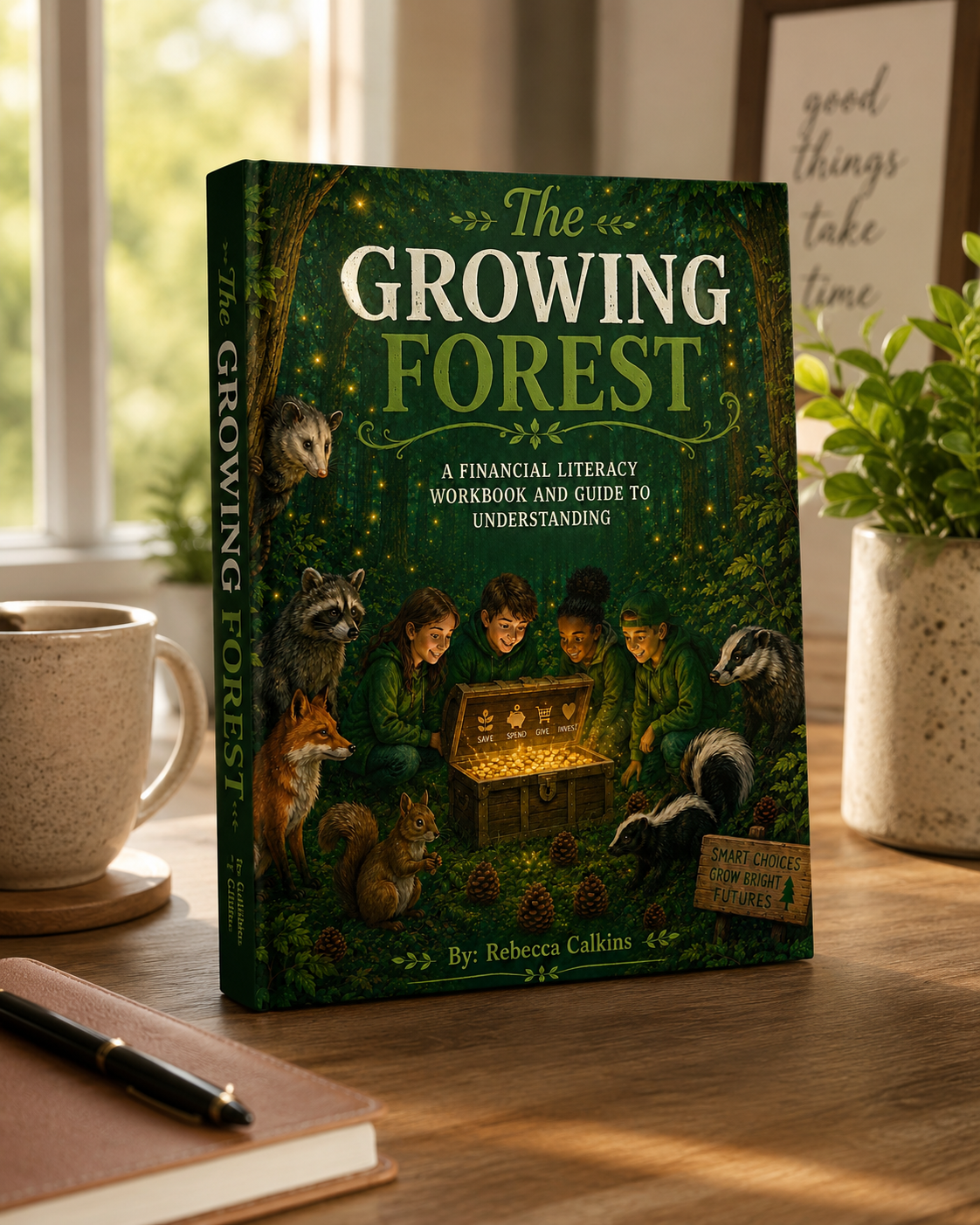
The Growing Forest is a hands-on financial literacy workbook and guide that helps kids learn real-life money skills in a fun, relatable, and meaningful way. Because the best lessons today grow a brighter tomorrow.

The Growing Forest workbook cover mockup

Why I wrote
this book?

Woodland animals gathered together

I never expected to write a book. It all started when I ordered financial guides for my two daughters. When I opened them, I was shocked. No definitions. No examples. Total gaps in the exact life skills everyone needs to survive. I wondered, “How is a child supposed to learn from this?” So, I decided to write the book they actually needed.

When people hear about this, they always ask: “Are you a financial expert?” The honest answer is no. I’m learning right alongside my readers. I was driving to work, listening to Dave Ramsey when he shared a famous Maya Angelou quote:

“Do the best you can until you know better.
Then when you know better, do better.”

That is exactly what I am doing. I am taking my current knowledge, expanding it, and passing it down. I want my daughters to start ahead of where I began. At the end of the day, that is the universal goal of parenting: giving our children the tools to build a better life than our own.
How to teach Financial Education

Let’s be honest: talking to your kids about money can feel like pulling teeth, especially if they aren’t interested. How do you actually get through to them without it turning into a battle? The trick is changing the dynamic. Here are some ideas to try.

× Stop doing these things

  1. Stop the lectures.Lectures will not help anything.
  2. Stop handing out cash on demand.They will not learn the value of money.
  3. Stop hiding the household finances.Do not make money a subject they feel uneasy about.
  4. Don't treat credit cards like magic.Make sure they understand the risks.
  5. Don't give them a debit card to begin with.They need to learn about cash first.

Try these methods instead

  1. Experiential LearningTie money into their interests. Shift from “teaching finance” and turn it into “funding their goals.”
  2. Give an allowance tied to chores and responsibilities.They learn by spending their own money.
  3. Let them make small mistakes.Sometimes that's the most powerful lesson.
  4. Start open casual conversations.Make money a normal part of everyday life.
  5. Help them think of a solution.Instead of saying “we can’t afford it,” guide them toward a plan.
  6. Start giving cash.Let them learn to handle it.
  7. Try savings challenges and “savings games.”
  8. Have them set a goal and save to reach it.

Real-Life Skills

Budgeting, saving, spending, giving, investing & more.

Engaging & Fun

Relatable stories, examples and activities that make learning stick.

For Kids & Teens

Designed for ages 10 and up—perfect for home or classroom use.

Build a Strong Foundation

Empower the next generation to make smart choices and grow bright futures.

Start their journey today.

Smart choices grow bright futures.

🛒  Buy the Book Now

“If any of you lacks wisdom, you should ask God, who gives generously to all without finding fault, and it will be given to you.” — James 1:5